Loading drone model...
Vexil Systems / Project Aegis
Restore communication when terrain breaks the link.
A deployable drone-based radio repeater designed for search and rescue teams operating in mountains, canyons, forests, and obstructed terrain.
The Problem
When line of sight fails, rescue coordination slows down.
Handheld radios can lose effectiveness when terrain blocks the signal path. In search and rescue, communication gaps can delay decisions, split teams, and reduce situational awareness.
Terrain blocks radio paths
Mountains, ridges, and canyon walls obstruct line-of-sight radio signals, creating dead zones between teams.
Teams lose direct communication
Without a clear signal path, search parties cannot coordinate positions, share findings, or call for support.
Temporary infrastructure is hard to deploy
Fixed repeater towers take time and resources. In emergencies, teams need communication restored within minutes.
The Solution
A drone that becomes the missing link.
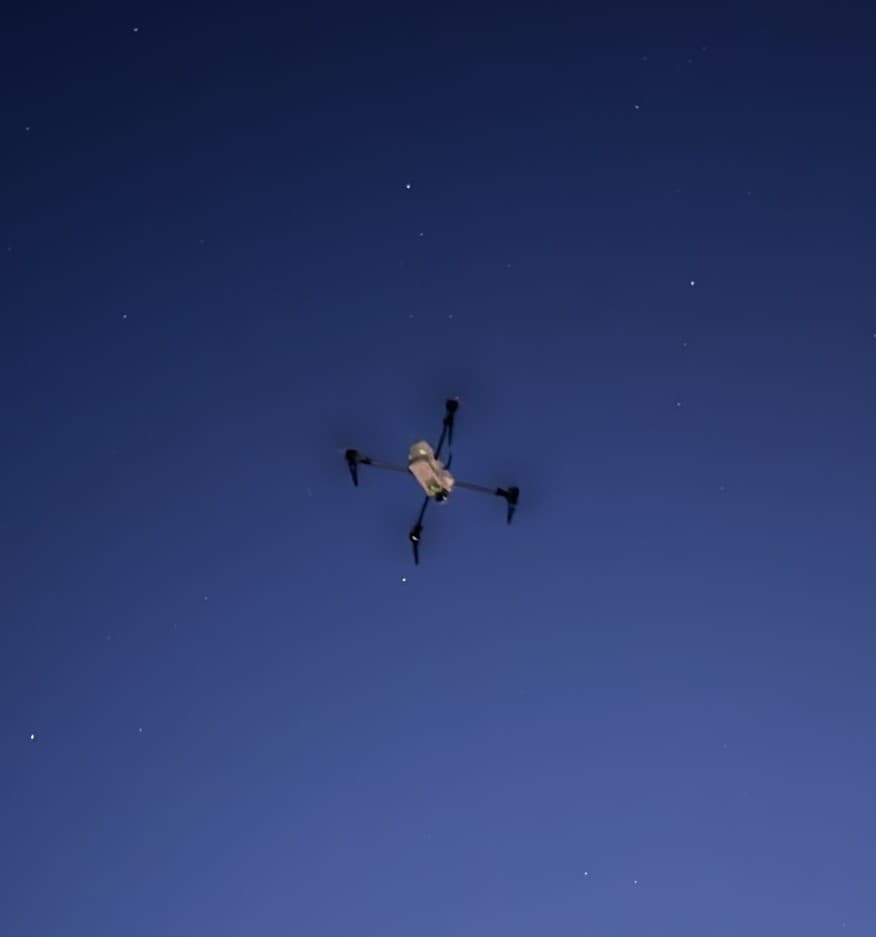
The system uses a drone as a temporary elevated repeater platform. Once positioned on a high point, it creates a relay path between operators who cannot directly reach each other.
- Rapid deployment
- Elevated relay position
- No permanent infrastructure
- Improved field coordination
- Portable emergency use
How It Works
From blocked signal to restored communication.
Deploy
The team launches or places the drone near the obstructed area.
Position
The drone lands at an elevated ridge, hill, or structure.
Relay
The repeater receives and retransmits communication between separated teams.
Coordinate
Search teams regain radio contact and maintain better situational awareness.
System Architecture
Designed as a complete field communication system.
Features
Built for field conditions and fast decisions.
Elevated relay coverage
Places the repeater above terrain obstacles to improve communication paths.
Landed operation
Allows the drone to conserve power while stationed on a ridge or elevated surface.
Portable deployment
Designed around fast setup and transport for search and rescue scenarios.
Radio-first design
Focused on extending practical handheld radio communication without unnecessary complexity.
Clear system status
Shows connection state, battery, and relay status in a simple interface.
Capstone validated
Built around engineering design, prototyping, and field-style testing.
Platform Design
UAV Platform Design
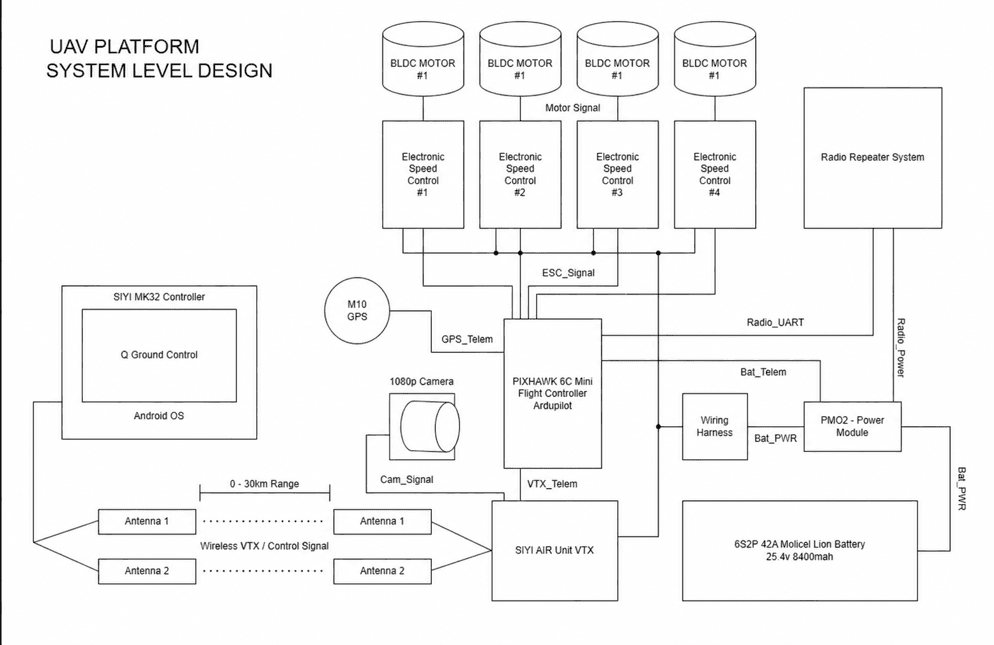
The UAV platform serves as the mobile foundation for the repeater system. Its purpose is to carry the communication payload to an elevated position, land on a stable surface, and maintain a relay point between teams separated by terrain.
Instead of relying on continuous hover, the system is designed around a landed relay concept. The drone flies above the obstruction, settles on a flat ridge or high point, and keeps the repeater positioned where the radio path is strongest.
- Mobile elevated relay point
- Landed operation to reduce power demand
- Payload layout designed for balance
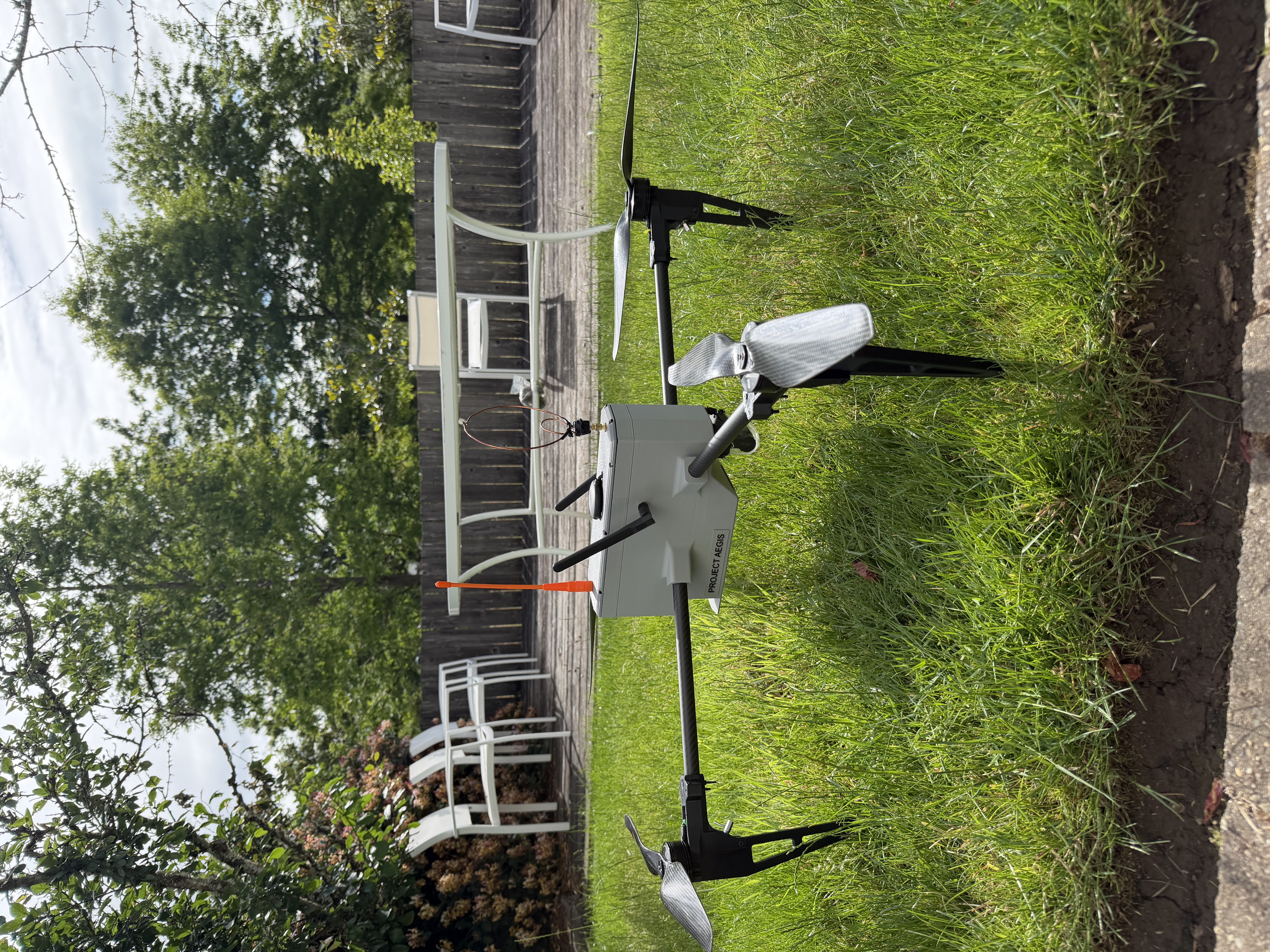
- Antenna placement for VHF and UHF paths
- Simple deployment and recovery workflow
Key Components
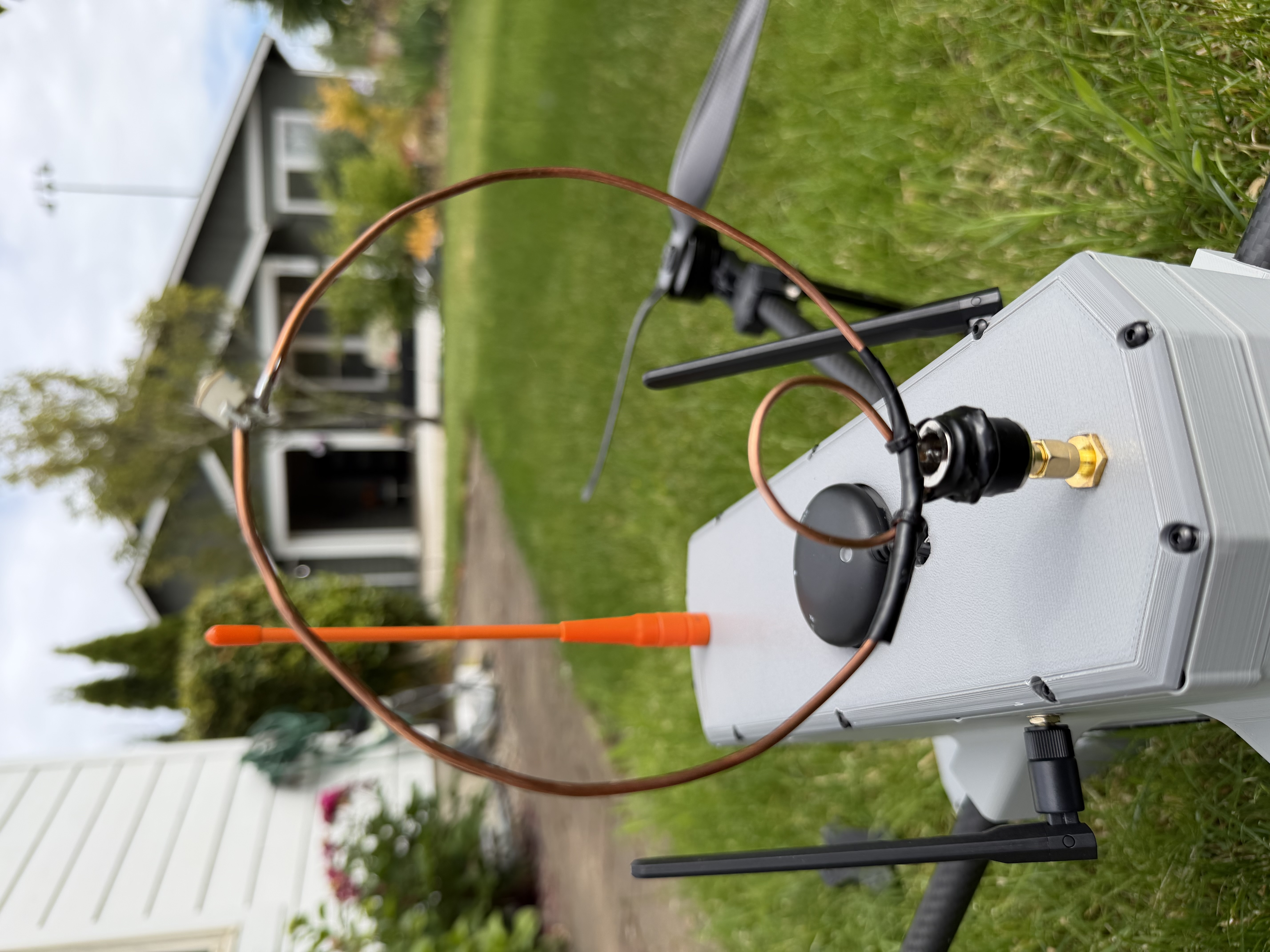
VHF Antenna
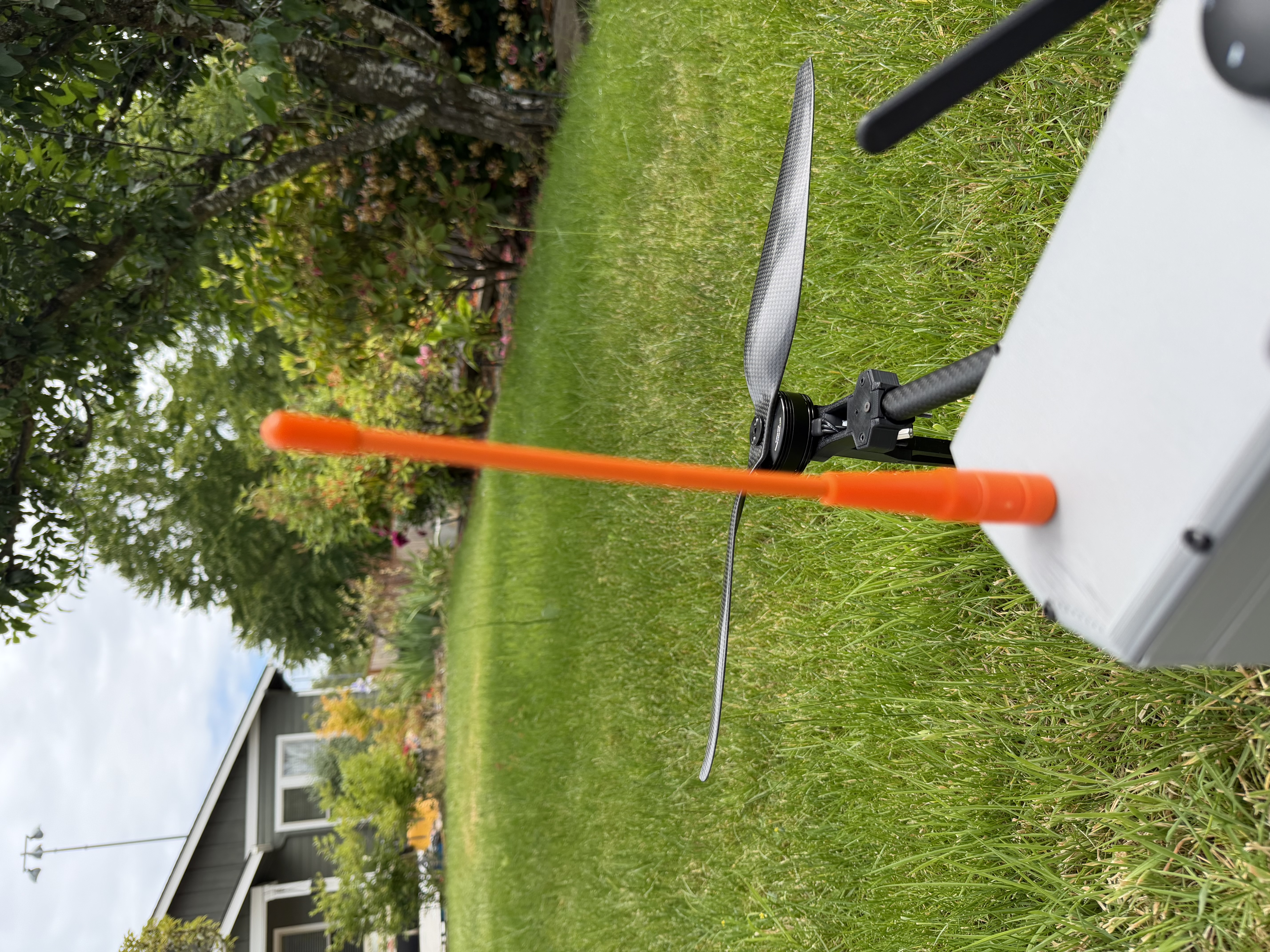
UHF Antenna
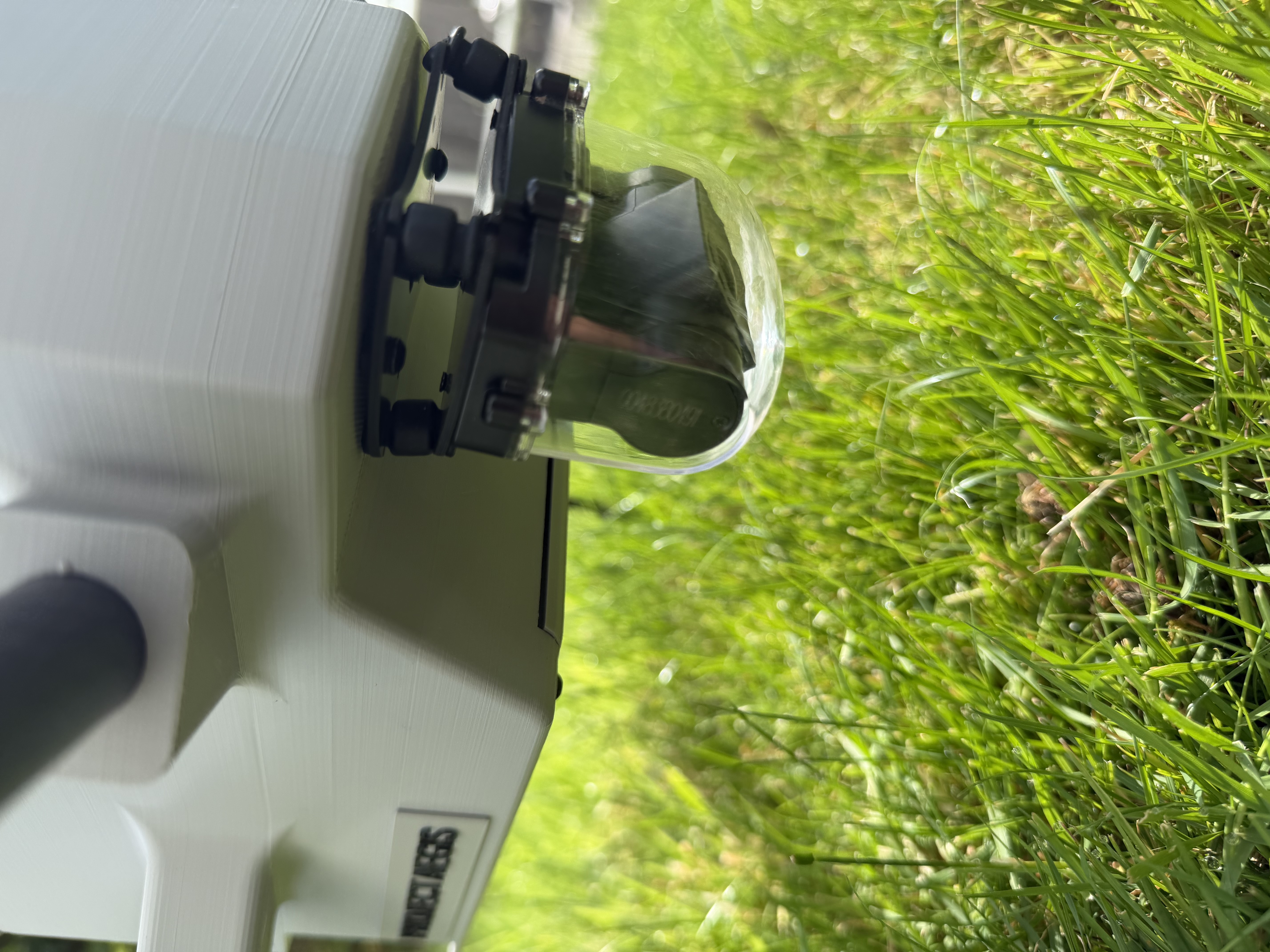
Camera
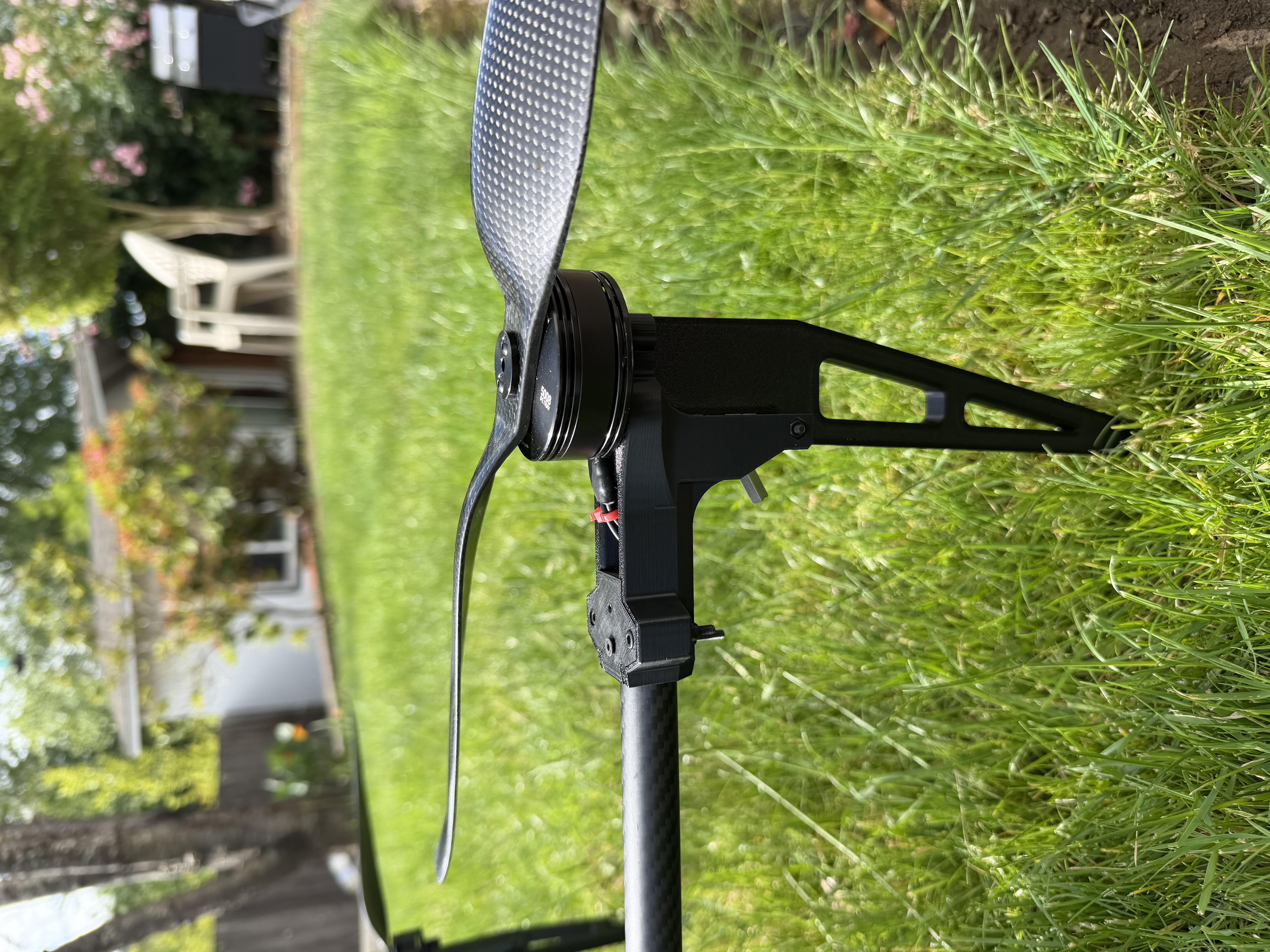
Motor Mount
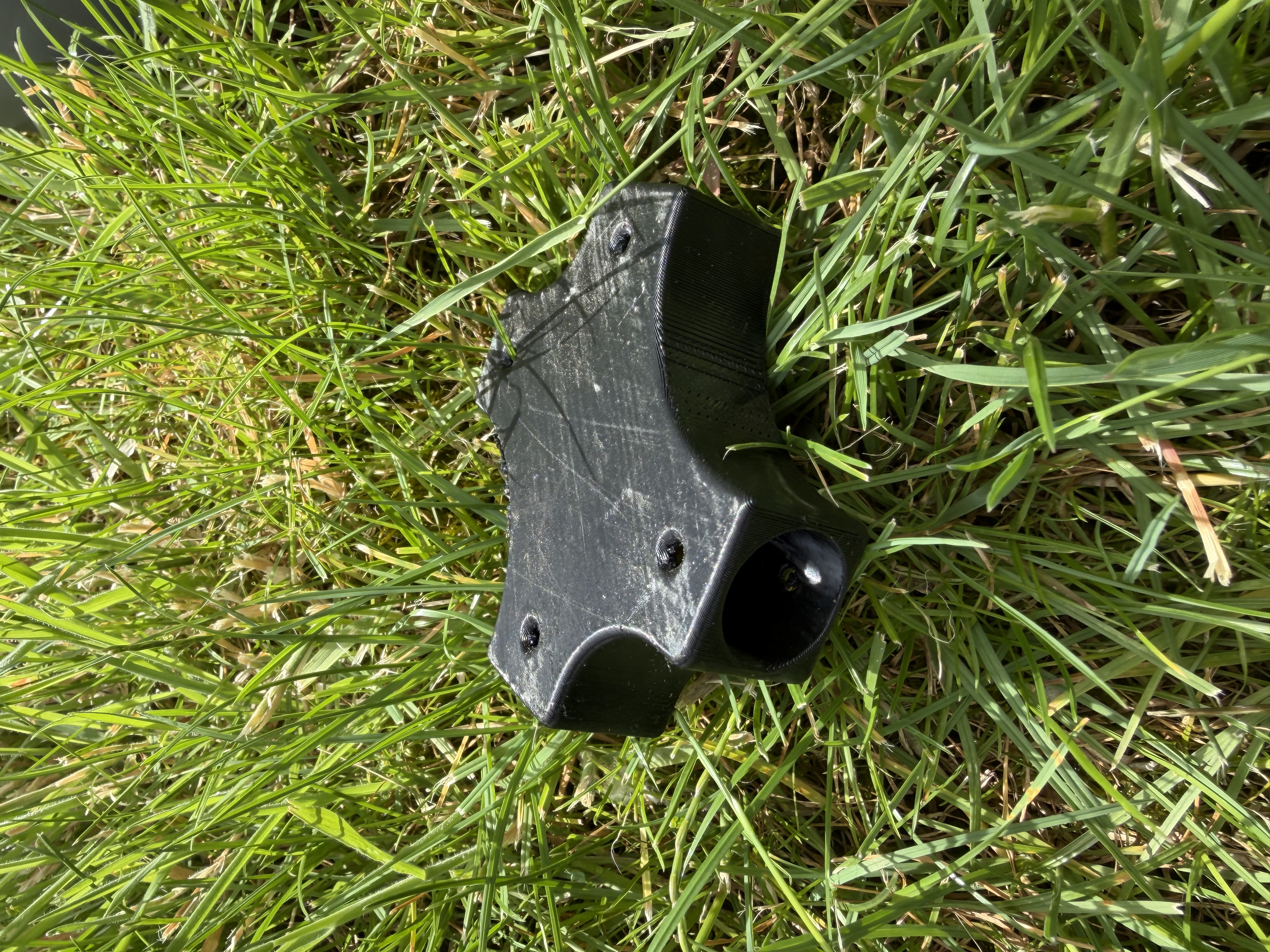
Central Brace
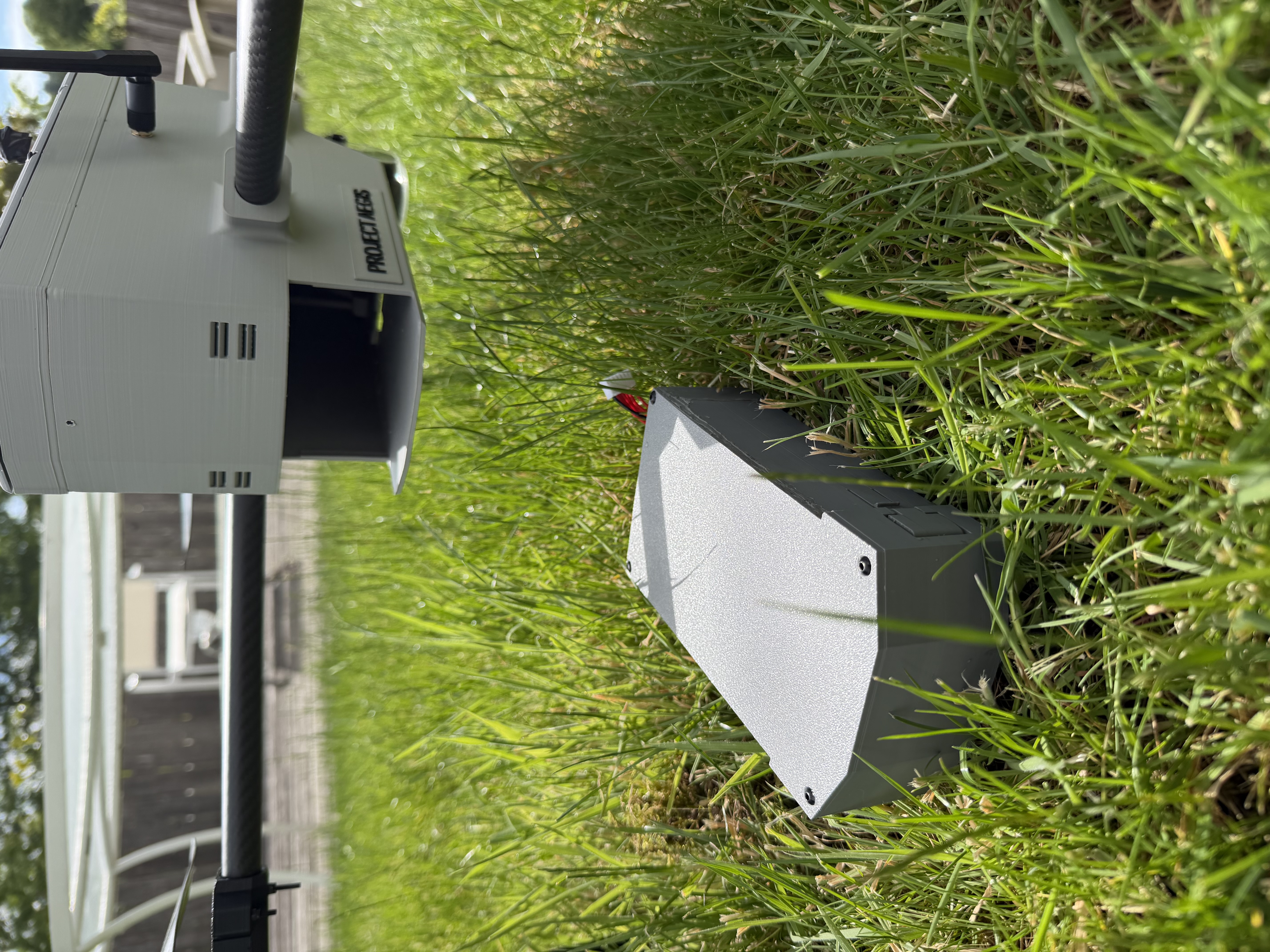
Battery
Payload Integration
The repeater module is mounted to keep the UAV balanced while allowing access to antennas, wiring, and power connections.
Landed Relay Operation
The platform is designed to land on an elevated surface so the repeater can operate without requiring continuous hover.
Power Efficiency
Landing during relay operation reduces drone power demand and helps extend the useful communication window.
Antenna Placement
The UAV layout supports clear VHF and UHF signal paths while keeping antennas away from major frame obstructions.
Field Deployment
The platform is built around quick setup, simple launch, stable landing, and easy recovery by search and rescue operators.
Stability & Balance
Payload position, center of gravity, and landing support are considered to maintain reliable flight and landing behavior.
Engineering Tradeoffs
Payload Weight
More equipment increases capability but reduces flight time.
Antenna Height
Better signal path improves relay performance but adds mounting complexity.
Landing Operation
Landing saves power but requires a stable surface.
Frame Size
A larger platform supports payload better but reduces portability.
Battery Capacity
More battery can extend operation but adds weight.
Simplicity
A simpler platform is easier to deploy but supports fewer advanced features.
Radio Repeater
Bridging the communication gap.
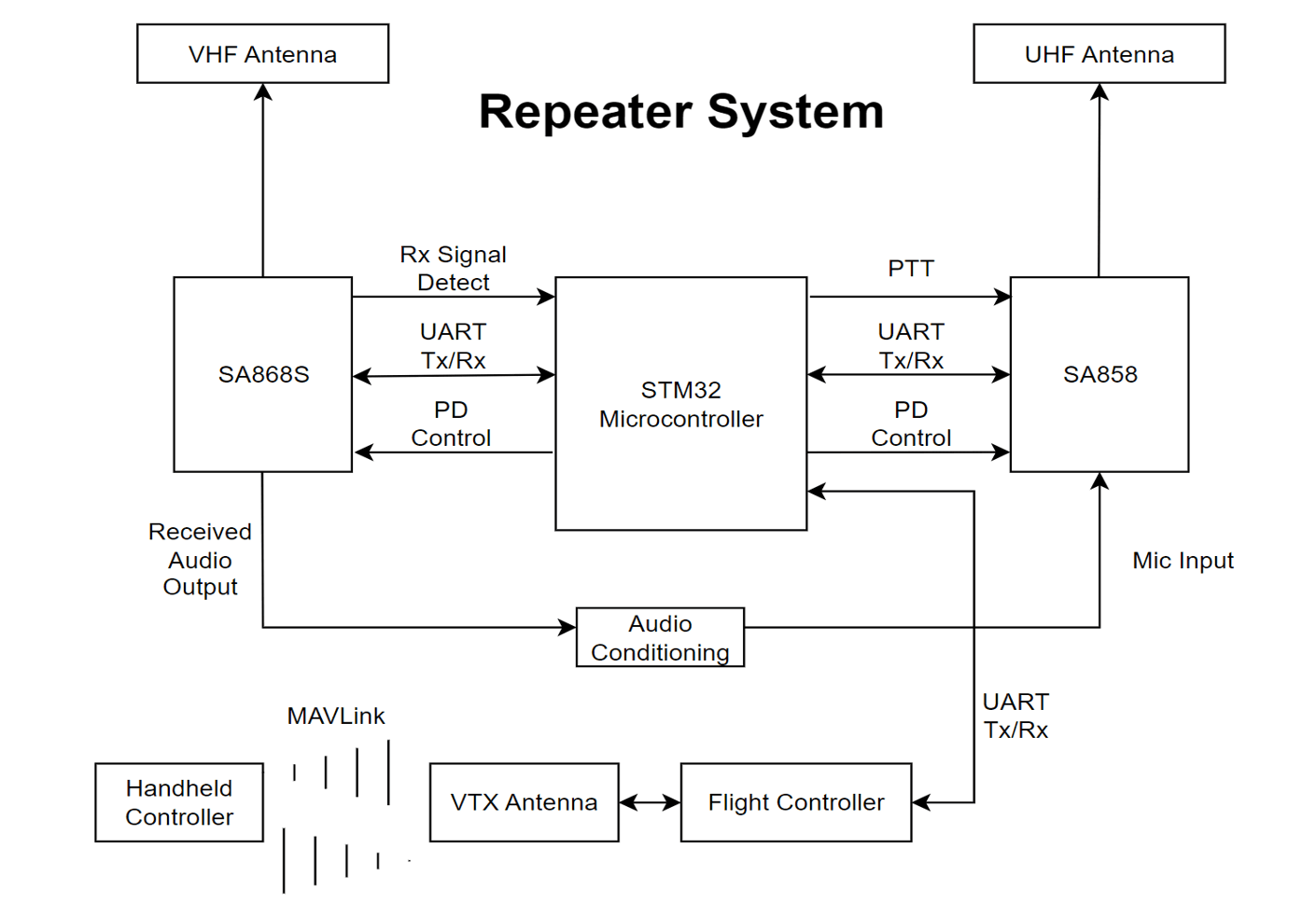
The repeater receives on VHF, retransmits on UHF at four watts, and runs landed so the battery goes to the radio.
Frequency Bands
VHF: 134 to 174 MHz
UHF: 400 to 480 MHz
Relay Endurance
30+ minutes per battery, landed
Transmit Power
4W
Gallery
Prototype, diagrams, and field testing.
Prototype Photo
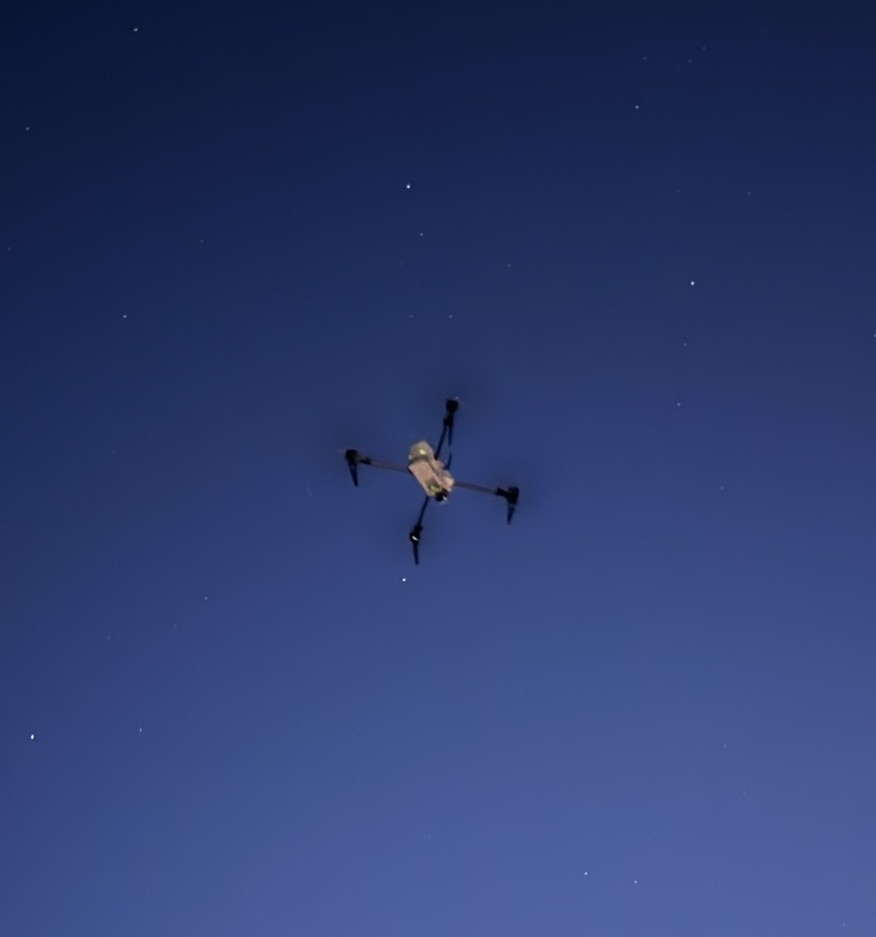
Flight Test Setup
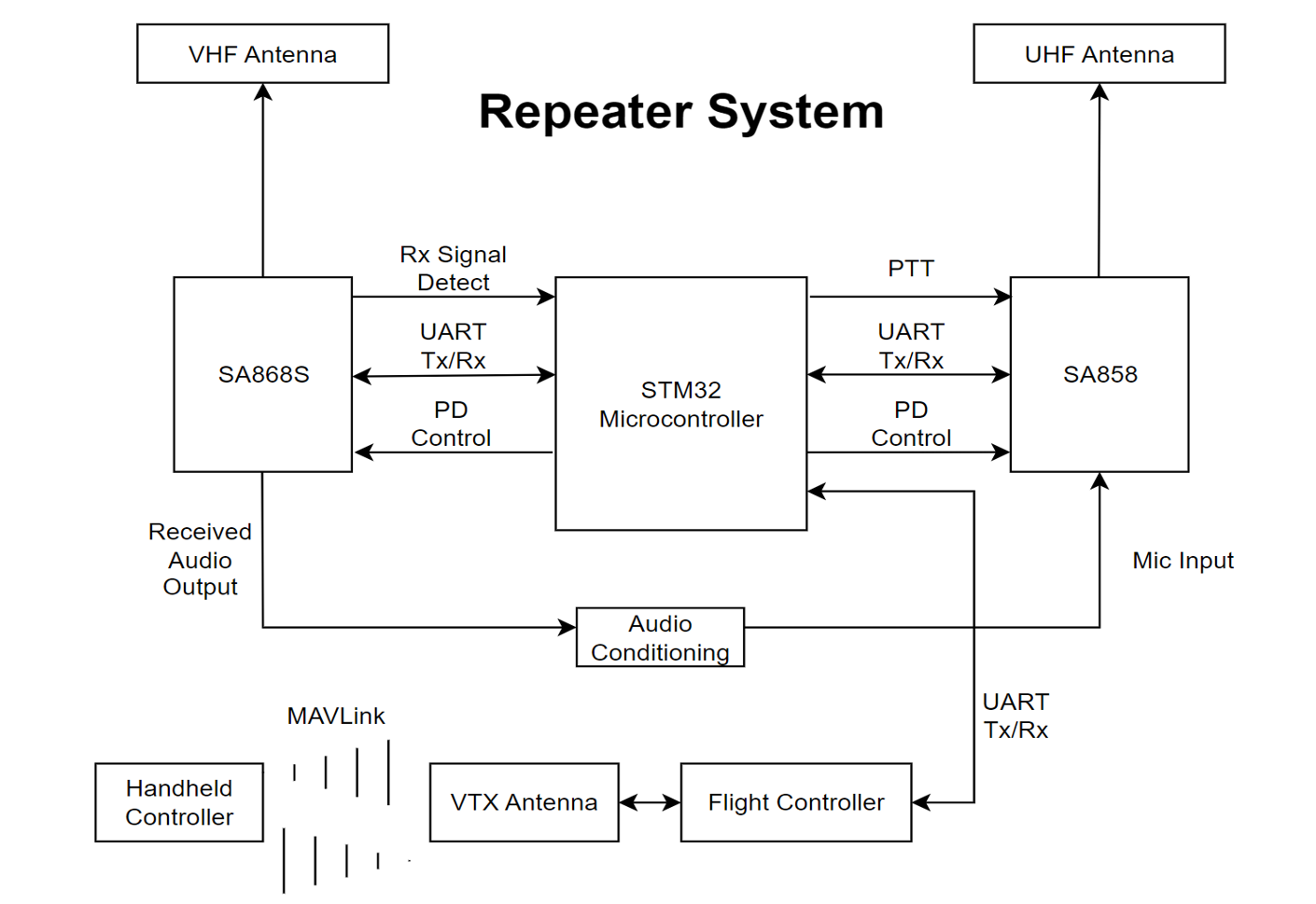
Repeater System Diagram
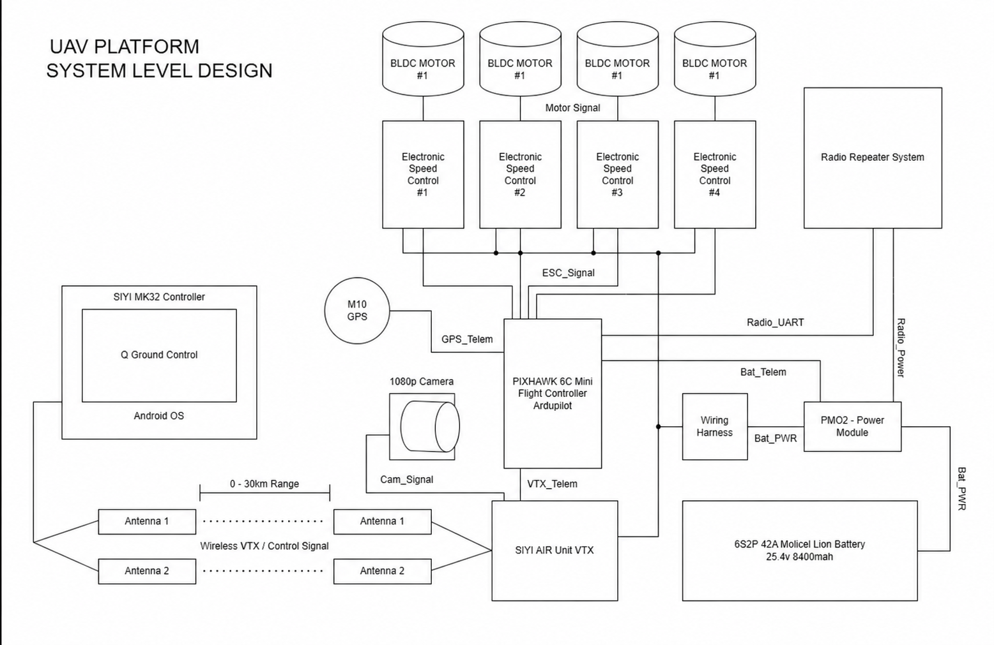
UAV System Diagram
Capstone Poster
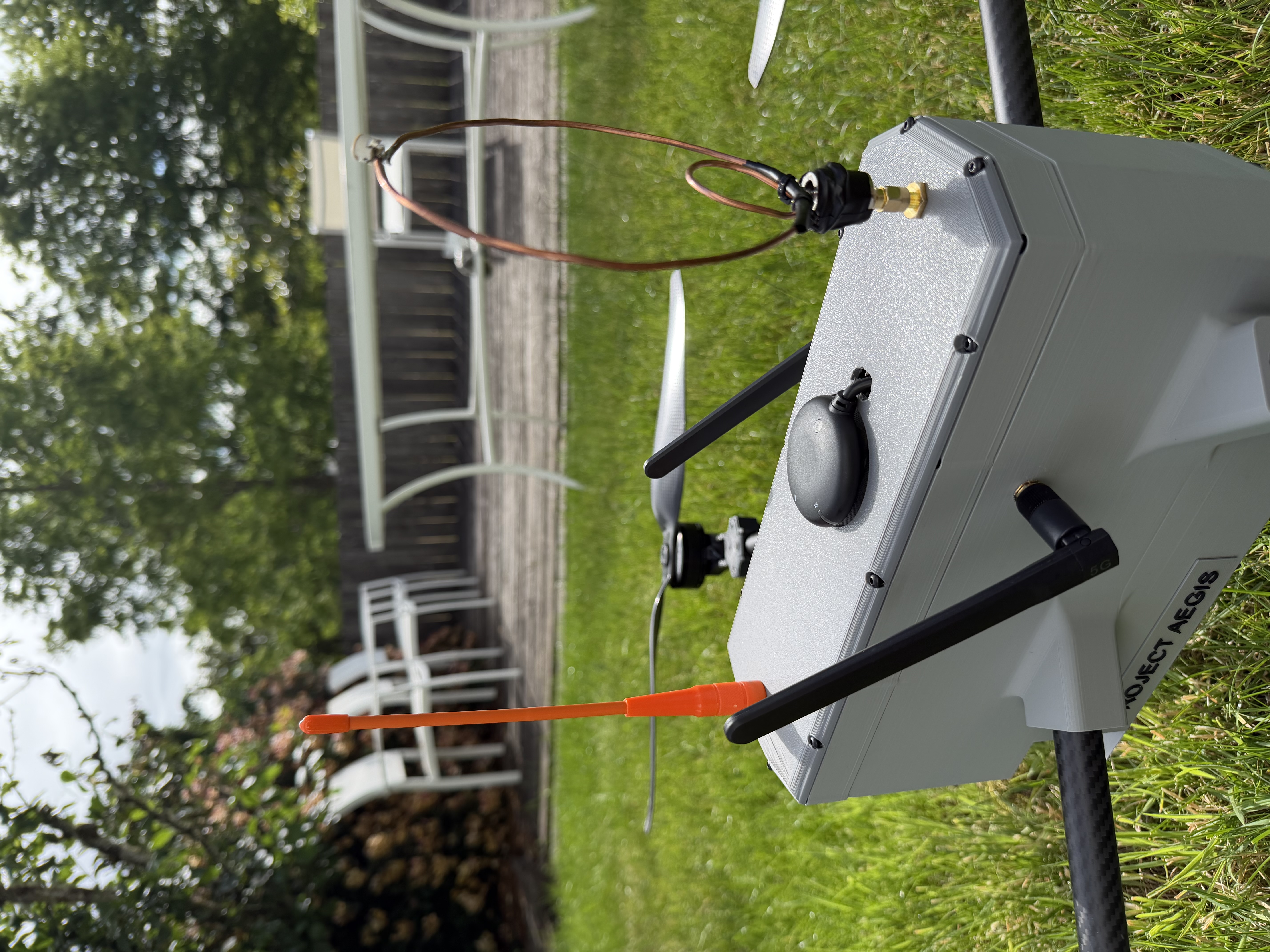
Antenna Hardware
FAQ
Frequently asked questions
Drones can reach elevated positions quickly without requiring permanent infrastructure. By landing on a ridge or high point, the drone acts as a temporary relay tower, restoring line-of-sight communication between teams separated by terrain.
No. The system is designed for landed operation. Once the drone reaches an elevated surface, it lands and operates the repeater from a stationary position, significantly extending battery life compared to continuous hover.
The system targets mountainous, canyon, and forested terrain where ridges, hills, and dense vegetation commonly block handheld radio signals between search and rescue teams.
The repeater is designed to work with standard UHF and VHF handheld radios commonly used by search and rescue teams. The system receives on VHF and transmits on UHF.
The drone and repeater module are powered by onboard LiPo batteries. Landed operation conserves power, and the system is designed to provide enough relay time for typical SAR coordination windows.
Weight versus signal range, battery life versus relay power, and landing stability versus portability were the primary tensions. Each decision balanced field practicality against engineering ideals.
UAV testing included outdoor flights to measure flight time and maximum control range. Repeater testing covered UART configuration of the radio modules and bench validation of VHF reception and UHF transmission. Field range testing is planned.
Future iterations could include autonomous positioning via GPS waypoints, solar-assisted charging for extended deployment, weatherproof enclosures, and mesh networking support for multi-drone relay chains.